Wisconsin Classic Stage

Actors
Studio

A dedicated space for the craft of acting — where rigorous classical training meets bold physical and vocal practice. Rooted in the lineage of Overlie, Bogart, Landau, and Suzuki. Led by a director who has lived this work from the inside out.

Spring & Summer Classes — Currently Full
New classes will be announced late summer 2026. Join the list below to be first in line.
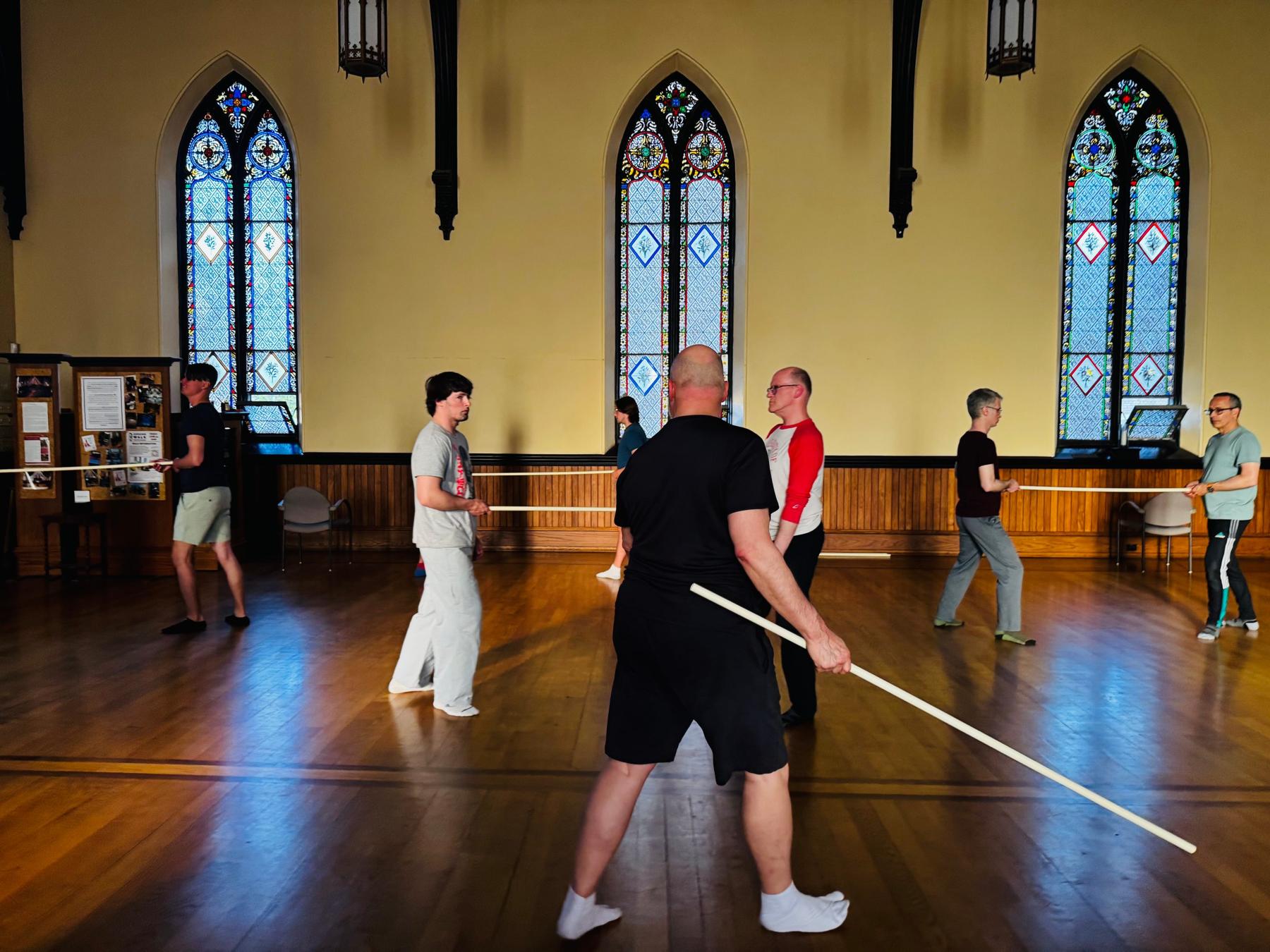
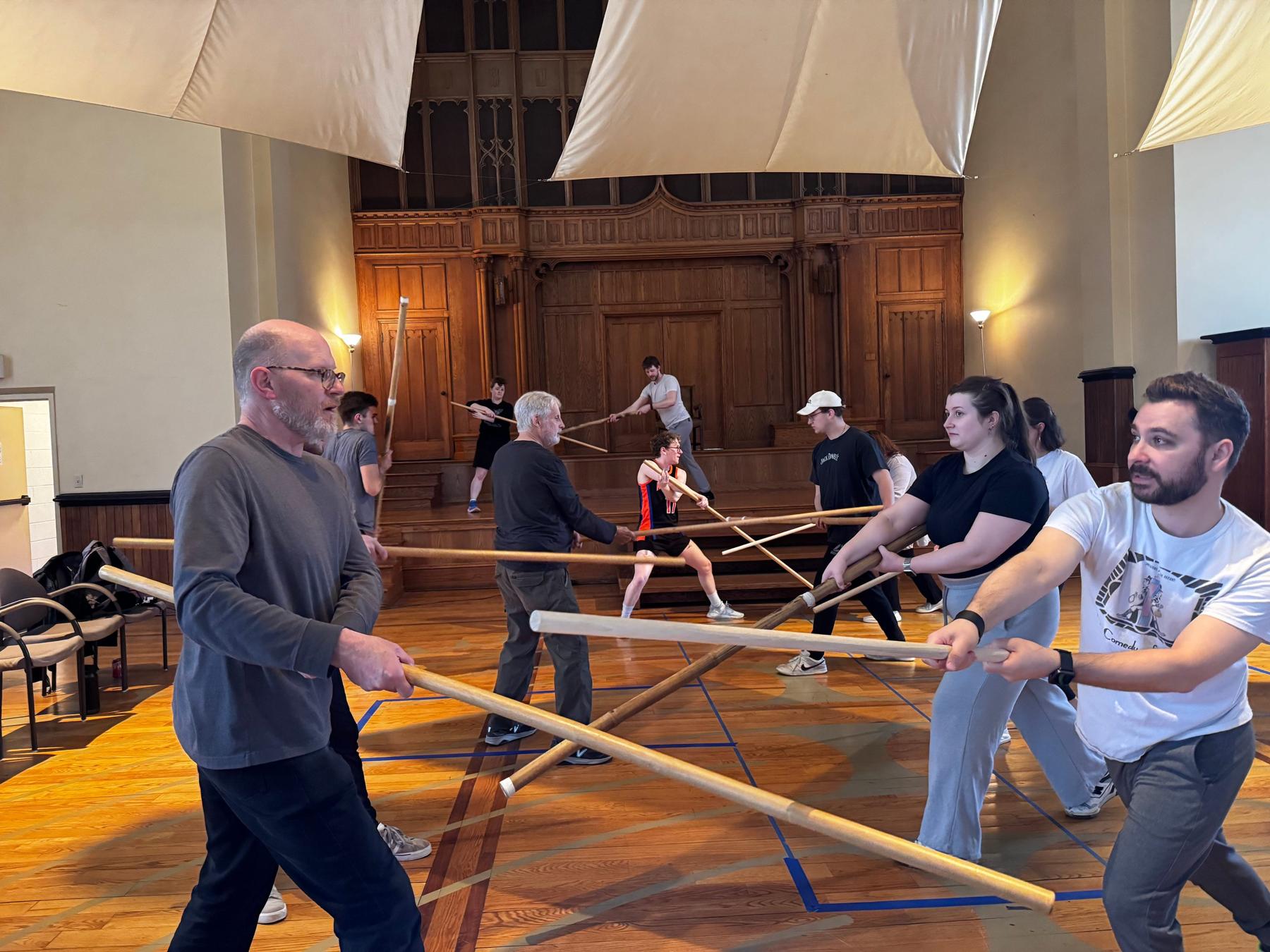
Josh Pohja teaching at WCS Actors Studio
Your Guide in the Work

Josh
Pohja

Executive Artistic Producer · Studio Director

"The actor's job is to create an experience for the audience's entire being."

— Josh Pohja · Wisconsin Classic Stage

Josh Pohja is the founding Executive Artistic Producer of Wisconsin Classic Stage and the director of its resident training program, the WCS Actors Studio. He brings to this work more than two decades of professional experience as an actor, director, and teacher — shaped by some of the most rigorous training programs and companies in American theatre.

A graduate of the Carnegie Mellon School of Drama, Pohja trained during the historic residency of the Moscow Art Theatre under Anatoly Smeliansky, alongside a faculty that included Andrei Șerban, Bulgarian director Mladen Kiselov, Ibsen scholar Brian Johnston, Victoria Santa Cruz, and others. He went on to perform nationally with The Guthrie Theater, The Acting Company, The Old Globe, and Alley Theatre, as well as at Judson Church, HERE Arts Center, and the New York Fringe Festival.

Before founding WCS, Pohja directed a series of acclaimed productions as Artistic Director and Co-Founder of Vanguard Productions (2022–2024), including All Is Calm, Antigone, and My Name is Rachel Corrie — each receiving critical praise for their direction and text-driven clarity. Earlier, he founded Duende Collective in Los Angeles, cultivating a training ground for LA actors through underground readings and ensemble practice.

He is an alumnus of the Wisconsin Directors Lab and the Saratoga International Theatre Institute (SITI) — Anne Bogart's company — and a 25-year member of Actors' Equity Association and SAG-AFTRA.

"Pohja's blocking…make the play feel lyrical and appropriately deterministic. Embodying it with a tragic beauty — I've seen many great things at First Stage, but this represents a new height in sophistication."

— Lawrence Riordan · Around The Town Chicago
Connect with Josh →
Training
Los Angeles County High School for the Arts, Acting & Directing · Carnegie Mellon University School of Drama, Acting · Moscow Art Theatre Residency · SITI Company · Anne Bogart · Wisconsin Directors Lab
Specialties
Shakespeare · Chekhov · Greek Drama · Viewpoints · Directorial Composition · Voice & Speech · Movement · Corporate Public Speaking
National Companies
Guthrie Theater · The Acting Company · The Old Globe · Alley Theatre · Milwaukee Repertory Theatre · Shakespeare Center Los Angeles · First Stage Young Company · Milwaukee Chamber Theatre
Professional Influences
Aled Davies · Andrei Serban · Anne Bogart · Anthony McKay · Barbara Mackenzie-Wood · C. Bernard Jackson · Don Wadsworth · Ellen Lauren · Ingrid Sonnichsen · Jack O'Brien · Jefferson Mays · Jesse J. Perez · Joe Dowling · Kelly Maurer · Margot Harley · Penny Johnson Jerald · Sheri Williams Pannell · Stephen Haves · Victor Quijada · Victoria Santa Cruz · Vicky Silva · Will Bond
Memberships
Actors' Equity Association · 26 years · SAG-AFTRA

"Josh Pohja was one of my first true collaborators. A theatre maker through and through. He's a real storyteller and always wants to give the audience an experience. He's after the visceral needs of the characters and he encourages every actor to fight for their own story. We met in our formative years and I cannot wait to get back in a rehearsal room with him."

Jesse J. Perez
Craig Noel Distinguished Professor · The Old Globe & University of San Diego Shiley Graduate Theatre Program
The Training

Where the Work
Comes From

The WCS Actors Studio draws on three foundational methodologies — each a complete system in its own right, each complementary to the others. Together they address the full instrument of the actor: body, voice, space, and imagination.

ViewpointsOverlie · Bogart · Landau
SuzukiPhysical Discipline
Classical TextLanguage as Action
Mary Overlie's Framework

The Six Viewpoints

In the 1970s, postmodern choreographer Mary Overlie developed a radical framework — deconstructing the stage into six fundamental elements of perception. Rather than asking actors to emote, she invited them to observe, and respond with presence. Hover each point to explore.

Space
Where we are
Shape
Form the body makes
Time
Rhythm & duration
Emotion
Feeling as material
Movement
The kinetic impulse
Story
Narrative & meaning
Space

The awareness of where the performer exists in relation to stage, other performers, and audience. Not just position — the felt quality of place.

Shape

The configuration the body takes in space — curved, angular, expansive, contracted. Shape is the body's visual language, its signature on the air.

Time

The rhythm, tempo, and duration of action. Everything that happens has a when — and that when is always a creative choice.

Emotion

Not feeling as result but as material — present, observable, responsive. Overlie treated emotion as a viewpoint, not a destination to arrive at.

Movement

The kinetic quality of transition — how the body travels from stillness to motion and back. The texture of physical life in performance.

Story

The meaning-making dimension — the narratives that inevitably arise when humans watch humans. Story emerges; it need not be imposed.

Overlie's six became the seed of something larger — when Anne Bogart and Tina Landau expanded the framework into nine, they created the definitive actor training system of our era.

Bogart & Landau's Expansion

The Nine Viewpoints

Building on Overlie's foundation, Anne Bogart and Tina Landau developed a comprehensive training system now practiced in conservatories worldwide. Josh trained directly within Bogart's orbit as an alumnus of SITI Company — bringing firsthand knowledge of this methodology to every WCS Actors Studio class.

Anne Bogart and Josh Pohja, Skidmore College 1998
Anne Bogart and Josh Pohja · Skidmore College, Summer 1998
01
Tempo

The rate of speed at which movement or action occurs. Tempo controls the pulse of a scene — immediate and visceral.

02
Duration

How long any single movement or action lasts. Duration stretches or compresses the felt experience of time.

03
Kinesthetic Response

The spontaneous physical reaction to what happens around you — the body's instinctive answer before the mind intervenes.

04
Repetition

Repeating movement or text until new meaning emerges. Repetition reveals what is essential by stripping away novelty.

05
Shape

The line the body makes in space at any given moment. Shape communicates before language and after silence.

06
Gesture

Behavioral (everyday) and expressive (abstract, internal). Gesture is the body's vocabulary made conscious and deliberate.

07
Architecture

The physical environment and how the body relates to it. Space is not backdrop — it is a partner in every human interaction.

08
Spatial Relationship

The distance between bodies and objects on stage. Every spatial choice carries emotional and dramatic weight.

09
Topography

The floor pattern bodies trace through space over time — the choreography of attention and meaning across the stage.

The Voice

Vocal Viewpoints

The Viewpoints framework extends fully into the actor's voice — giving performers a precise, playful vocabulary for the sonic landscape of performance. The voice becomes as responsive and intentional as any physical action.

↑↓
Pitch

The highness or lowness of sound. Pitch maps emotion, status, and urgency — the music beneath every spoken word.

Volume

The loudness or softness of voice. About presence and intention in sound — not merely projection.

Tempo

The speed of speech — governing the pace of thought itself and the rhythm of a character's inner life.

Accel / Decel

The change in speed within an utterance — the build and release of vocal energy as thought moves toward meaning.

— —
Pause / Silence

The deliberate absence of sound. Silence is charged, active — often the most powerful moment a voice can create.

Timbre

The quality and color of voice — bright, dark, breathy, resonant. Timbre is the fingerprint of a voice and texture of character.

Duration

How long individual sounds or phrases are held. Duration shapes the weight of language beyond its literal content.

Shape

The arc and contour a phrase takes through space — the architecture of thought in a form the listener can feel.

The Body as Instrument

The Suzuki Method

The Suzuki Method of Actor Training approaches the body as a total instrument — rooted in the feet, powered by breath, built on absolute physical discipline. Developed by Japanese director Tadashi Suzuki, this method trains the actor to command the stage with animal presence and fearless precision. At the WCS Actors Studio, Suzuki principles are woven throughout all training — building performers who move with intention and inhabit the stage with complete, unapologetic presence.

I want audiences to leave the theatre with a sense of amazement and wonder in the face of human capacity.

— Tadashi Suzuki

The actor's job is to create an experience for the audience's entire being.

— Josh Pohja · Wisconsin Classic Stage
The Complete Actor

"Imagination is
Your Strongest Muscle"

The WCS Actors Studio is built on the conviction that imagination — not realism, not sense memory — is the actor's most powerful instrument. Those other paths can be dangerous. Here, we train the brain and the mind toward something older and more alive.

Viewpoints, Suzuki, and the great classical text traditions do not compete. They complete. Each addresses a different dimension of the actor's instrument: the body in space, the body as discipline, and the imagination as the engine of everything. A performer trained across all three becomes capable of something rare: total, embodied, fearless presence.

We train toward duende — the term Federico García Lorca used for that dark, mysterious force that rises from the earth through the soles of the feet and into the artist. Not technique alone. Not emotion alone. Something older, deeper, and more dangerous than either. The moment when craft burns away and something irreducibly alive takes the stage.
⚡ Spring Classes — Currently Full

Train with
Wisconsin Classic Stage

All current classes are full. Fall classes will be announced in late summer 2026 — join the list and you'll be the first to know.

⟡ Spring Enrollment — Closed

Get notified when Fall enrollment opens

Fall 2026 classes will be announced late summer. Be first in line.